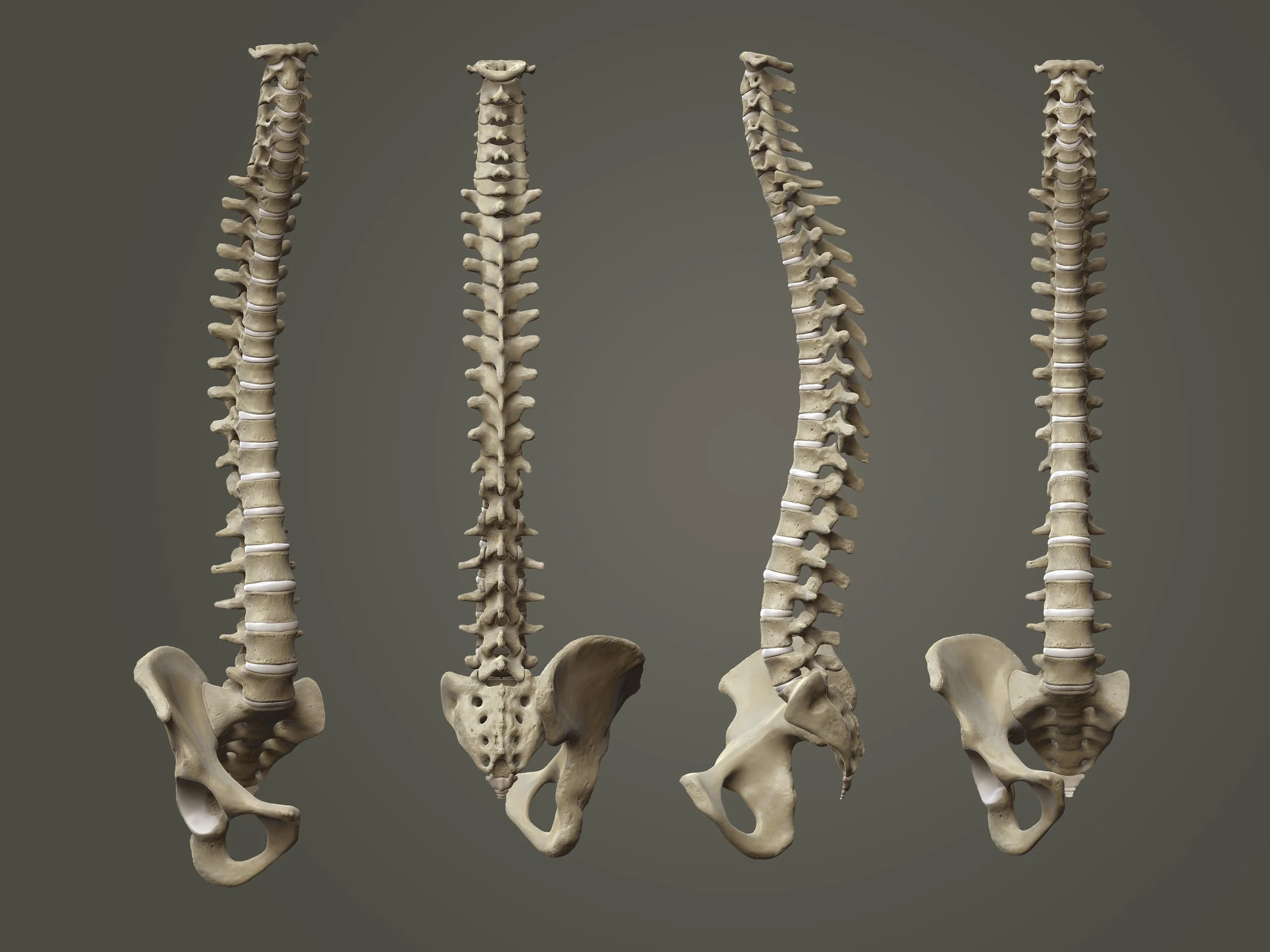
Anatomy of the spine
The bony spine, or vertebral column, is a central structural component of the axial skeleton, providing both support and protection for the spinal cord. It consists of 33 vertebrae divided into five regions: 7 cervical, 12 thoracic, 5 lumbar, 5 fused sacral, and 4 fused coccygeal vertebrae. Each vertebra is composed of a vertebral body anteriorly and a vertebral arch posteriorly, enclosing the vertebral foramen through which the spinal cord passes. The vertebrae are interconnected by intervertebral discs and facet joints, which allow for flexibility and movement while maintaining stability. The spine also serves as an attachment point for muscles and ligaments, contributing to posture and locomotion. Understanding the anatomy of the bony spine is fundamental for interpreting imaging, performing spinal procedures, and managing conditions such as disc herniation, spinal stenosis, and vertebral fractures.