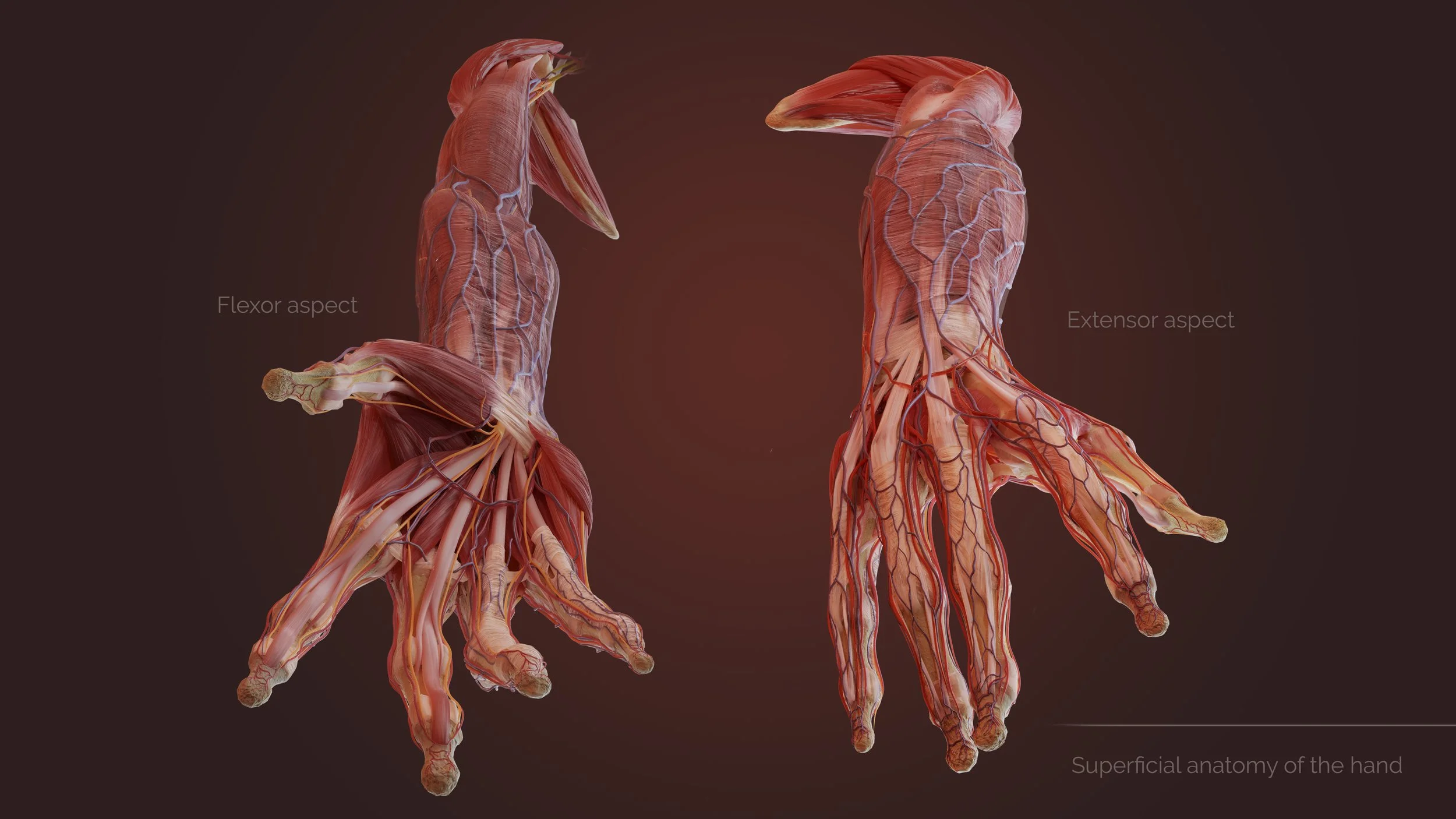
Anatomy of the upper limb
The anatomy of the hand is complex and highly specialized, allowing for intricate movements and dexterity. It consists of 27 bones divided into three regions: 8 carpal bones in the wrist, 5 metacarpal bones in the palm, and 14 phalanges in the fingers. The hand is organized into compartments containing muscles responsible for fine motor control, including the thenar (thumb), hypothenar (little finger), adductor, central, and interosseous compartments. These muscles are innervated primarily by the median, ulnar, and radial nerves. The blood supply is mainly provided by the superficial and deep palmar arches, formed by branches of the radial and ulnar arteries. Tendons of the flexor and extensor muscles, originating in the forearm, pass through synovial sheaths and fibrous tunnels to insert on the phalanges, facilitating hand movement. The hand also contains numerous ligaments, pulleys, and bursae that support stability and function, making it one of the most anatomically and functionally intricate parts of the body.